+7 (929) 727 53 60 Traumatology / Orthopedics / Neurosurgery
Mix-MAX Lyoplast: Permissible Proportions of Bioimplant Components
In order to cause direct bone formation in a volume of 1 cubic cm, it is necessary to have 200 living cells of the spongy bone. Then, when restoring vascular nutrition, bone formation will be a direct method on the surface of a living bone. We can assemble it, or by using a bone trap when drilling holes in the receiving bed. Or with the help of a drill without water at 100 revolutions per minute, then scraping off the spongy bone chips with a drill with a handy tool. Experimentally, we can say that these are 2-3 drills.
The proportions of Mx-MAX work in a very wide range. For us, the cells of autocapacity are the most valuable, therefore we prepare our Mix-MAX starting from them. From the first incision, capillary blood is collected from the incision with a 2 ml syringe and placed in two petri dishes. Blood is diluted with saline to reduce clotting, or citrate solutions if present. Spongy bone cells are collected into the bloodstream and then various materials of Lioplast are added in fractions, depending on the clinical situation. Most often, their own cells are mixed with demineralized compact bone powder, or with a mineral component: first, the smallest materials are added according to the dispersion and the required amount, and then the base material (mineralized spongy or cortical powder, or their mixture) is added to form the required final volume bioimplantat.
Regarding the ratio of Lyoplast-Xenograft, we do not recommend using xeno materials extensively, because the morphogenetic proteins of a cow, horse, pig or monkey will never cause the growth of human bone tissue. And this important biological principle due to species specificity must be considered first. Yes, xenografts can be used as an additional component to preserve the volume, if the doctor is used to working with xeno-materials and he sees a positive effect. But in large quantities and everywhere it will affect the newly formed volume of bone tissue, which we will receive after the operation. It is best to work with mixtures of materials and biological autocomponents, because each of these components has its own biological effect and its use is absolutely justified in all cases of oral or any other surgery. The proportions depend on the initial clinical situation and the scope of the surgical intervention. And also from the indicators of phenotypic planning of Maria Nosova.
More attention should be paid to the restoration of soft tissues, so we should also choose antibacterial therapy, which has a tropism for soft tissues. The first choice group is the latest generation macrolides. For example, Clarithromycin, it is available in a dosage of 250 mg and 500 mg. There are also retard tablets with CP marking. The drug is prescribed on the day of surgery and for 7 days after.
-
Mix-MAX Lyoplast: Pharmacotherapeutic Vascularization Induction
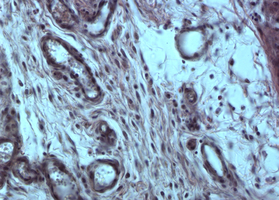 The directional effect of the combination of angioprotectors stimulates vascularization of the bioimplant, acting synergistically with inducers of osteo- and angiogenesis (DM-cortical powder).
Read more
The directional effect of the combination of angioprotectors stimulates vascularization of the bioimplant, acting synergistically with inducers of osteo- and angiogenesis (DM-cortical powder).
Read more
-
Lyoplast Mix-MAX: Differences in Mineralized and Demineralized Forms
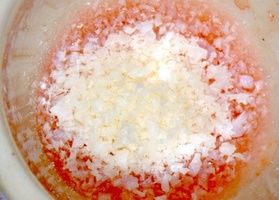 The process of demineralization of cancellous and compact bone with buffer solutions reveals a special property of materials: the ability to induce the growth of new bone in the area of a replaced defect.
Read more
The process of demineralization of cancellous and compact bone with buffer solutions reveals a special property of materials: the ability to induce the growth of new bone in the area of a replaced defect.
Read more
-
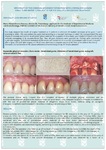
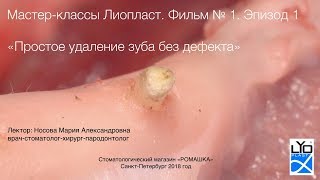
Operation 5. Preservation of the tooth hole during tooth extraction to the patient with periodontitis
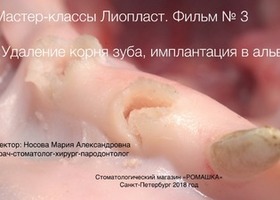 Ligament incision (scalpel) - Tooth or root removal - Revision of the hole - DM - Cell collection - Material + blood + NaCl - Filling the hole - Mobilization of the flap - Fixation of the membrane in / o - Sewing
Read more
Ligament incision (scalpel) - Tooth or root removal - Revision of the hole - DM - Cell collection - Material + blood + NaCl - Filling the hole - Mobilization of the flap - Fixation of the membrane in / o - Sewing
Read more
-
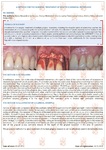
Operation 10. Implantation in the first type of bone tissue. Surgical training
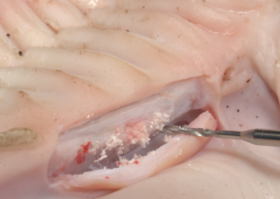 Incision - DM1 - DM2 - DM3 - Collection of cells - Installation of cells - TMO / without - Closure; 2 months: Incision - Implantation - Closure
Read more
Incision - DM1 - DM2 - DM3 - Collection of cells - Installation of cells - TMO / without - Closure; 2 months: Incision - Implantation - Closure
Read more