+7 (929) 727 53 60 Traumatology / Orthopedics / Neurosurgery
Areas of clinical use of materials "Lyoplast-S" (Samara, Russia)
The use of bio-implants "Lyoplast" in clinical practice
The basis of the developed operations with the use of biomaterials "Lyoplast" is based on the principle of individual selection of osteoplastic materials.
Anatomical and histological features of the structure of a bone damaged by diseases or injuries, its regenerative potencies, the degree of maturity of the bone tissue from which the graft is made are taken into account.
A set of therapeutic measures applied before the operation, during its implementation, and in the postoperative period.
These measures are aimed at the maximum elimination of the pathological condition in the bone, both through surgical techniques, and due to physiological factors and mechanical devices.
Combined treatment methods contribute to the elimination of the pathological changes in the bone, the full restoration of its shape, structure and functions.
The basis of the developed operations using the Lyoplast biomaterials is the principle of individual selection of osteoplastic materials.
Anatomical and histological features of the structure of a bone damaged by diseases or injuries, its regenerative potencies, the degree of maturity of the bone tissue from which the graft is made are taken into account.
A set of therapeutic measures applied before the operation, during its implementation, and in the postoperative period.These measures are aimed at the maximum elimination of the pathological condition in the bone, both through surgical techniques, and due to physiological factors and mechanical devices.
Combined treatment methods contribute to the elimination of the pathological changes in the bone, the full restoration of its shape, structure and functions.
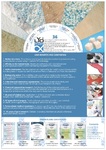
Groups of clinical cases where the material applies "Lyoplast":
- Preservation of the tooth hole after tooth extraction.
- Tooth extraction with simultaneous implant insertion.
- Filling the tooth hole after tooth extraction for delayed implantation.
- Implantation in type 1 bone.
- Sinus lifting by the closed method, by the open method up to 7 mm in height.
- Sinus lifting open more than 7 mm in height of the bone.
- Restoration of the alveolar process in width in the upper and lower jaw.
- Restoration of bone tissue in width and height in the upper and lower jaw.
- Cleavage of the alveolar process.
- Extensive bone plastics (plastic segments, total implantation).
- Treatment of periodontitis, tissue regeneration.
- Orthodontic surgical treatment of patients with periodontitis.
- Removal of odontogenic cysts and cysts of the nasal cavity.
- Surgery resection of the apex of the tooth root.
- Surgical treatment of gum recession: single and multiple.
- Plastics of soft tissues of the gums in the area of future bone grafting with a thin biotype.
- Creating a volume of attached keratinized gums in the area of the teeth.
- Individual bone blocks RBB to increase bone volume in the distal parts of the lower jaw and the frontal part of the upper jaw.
- Targeted tissue regeneration in any area (bone tissue regeneration, gum complex soft tissue regeneration). Product mixes for high quality newly formed bone tissue.
- Microsurgery of the gums and the use of the dura mater for plastics gums.
- Dissociation of oroanthral fistula.
-
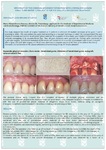
Surgical operations in which materials "Lyoplast-S" are used
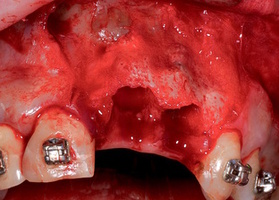 Учитываются анатомо-физиологические особенности пациента, его регенераторные потенциалы, тип кости, качество и объем костной и соединительной ткани, и другие показатели.
Read more
Учитываются анатомо-физиологические особенности пациента, его регенераторные потенциалы, тип кости, качество и объем костной и соединительной ткани, и другие показатели.
Read more
-
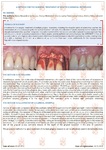
Instructions: Increase the volume of the attached gingiva with a Collagen membrane (dura mater)
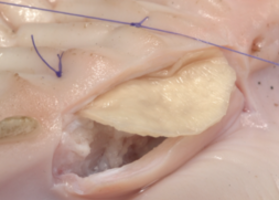 The purpose of the operation: the creation of the volume and thickness of the attached gingiva in the area of future bone grafting, an increase in the vestibule of the oral cavity, the launch of the patient's own regenerative potentials.
Read more
The purpose of the operation: the creation of the volume and thickness of the attached gingiva in the area of future bone grafting, an increase in the vestibule of the oral cavity, the launch of the patient's own regenerative potentials.
Read more
-
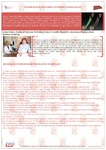
Instructions: Preservation of the hole after tooth extraction. Additional manipulation
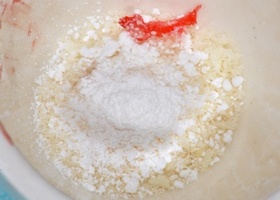 The purpose of manipulation: the release of reticulo-fibrous cells (Pritchard) from under the compact plate of the alveoli into the cavity to start regenerative processes in the blood clot and osteogenesis.
Read more
The purpose of manipulation: the release of reticulo-fibrous cells (Pritchard) from under the compact plate of the alveoli into the cavity to start regenerative processes in the blood clot and osteogenesis.
Read more
-
Instructions: Interval of delayed implantation after sinus lift
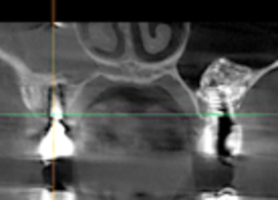 The waiting time depends on the baseline, volume and quality of the patient's bone in the sinuses, the condition of the soft tissues, the age of the patient, associated diseases and other factors.
Read more
The waiting time depends on the baseline, volume and quality of the patient's bone in the sinuses, the condition of the soft tissues, the age of the patient, associated diseases and other factors.
Read more